
20/10/2026 08:40
Which Demo Comes First? YouTube Playlist Order for Cambodian Seedling Shops

A seedling shop can have several useful videos and still leave customers unsure where to begin. A potting demonstration assumes they have chosen a suitable container; a care demonstration assumes they know which plant they bought. For Cambodian businesses promoting seedlings through social media, the order of those explanations deserves attention before spending money on promotion. A deliberately arranged YouTube playlist gives staff a repeatable route through related questions. This guide uses a hypothetical Cambodian nursery to explain how to choose that route, check the viewing experience, maintain the sequence and evaluate SMM-panel claims without confusing purchased engagement with customer understanding.
1. Define the customer task before collecting videos
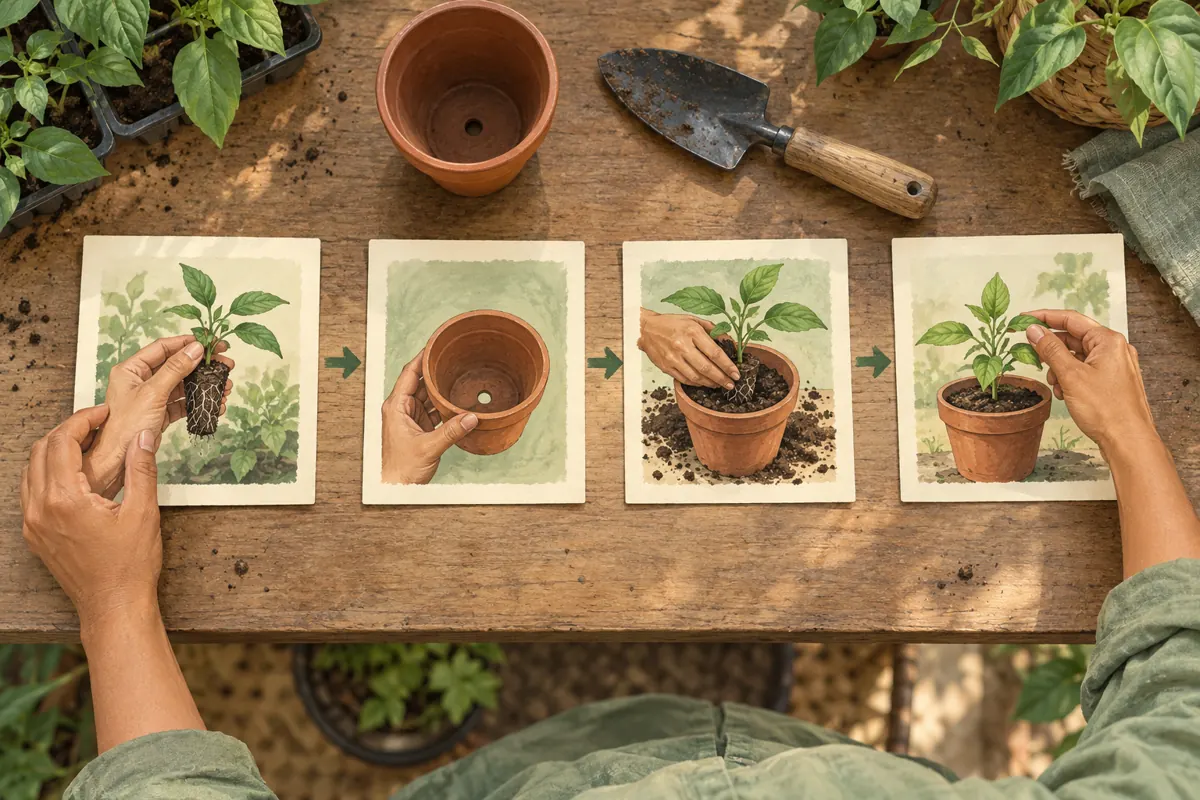
Start with one situation the shop can explain accurately. In this hypothetical example, a nursery near Phnom Penh wants to help first-time buyers move a particular herb seedling from its nursery container into a suitable pot. The intended outcome is a customer who understands what to prepare and what questions to ask. It is not a promise that every viewer will buy something or successfully grow the plant.
Write a scope sentence for staff: this guide covers choosing a container, preparing the materials, following the shop’s demonstrated potting method and checking the plant afterward. Exclude unrelated garden tours, bulk orders and decorative-pot promotions. Those videos may be useful elsewhere, but they interrupt this particular task. Have the person responsible for plant advice approve the actual horticultural instructions; a social media editor should not invent care requirements simply to complete a sequence.
2. Decide whether the explanation needs a playlist
Use a playlist when buyers have several related questions that remain useful as separate demonstrations. Container selection might help someone who has not bought yet, while a later care explanation might help an existing customer. Each video then has its own purpose, and the collection provides a suggested route through them. If everything can be demonstrated clearly in one short recording, dividing it into multiple uploads creates unnecessary navigation.
Sketch the proposed videos on paper before editing anything. Ask what the viewer must already know at the beginning of each one. If the potting video requires materials introduced elsewhere, place that preparation explanation earlier. If two videos answer almost the same question, keep the clearer version or revise their scope. This dependency check is more useful than arranging clips by upload date, production cost or how attractive their opening shots look.
3. Build an order that follows the buyer’s decisions
For the hypothetical nursery, begin with identifying the seedling and the conditions the demonstration assumes. Follow with container selection and materials, then the practical potting demonstration, then the shop’s approved follow-up checks. This is an editorial sequence, not universal plant-care advice. Different species or growing situations may require different instructions. Keep those differences explicit instead of combining incompatible demonstrations under a broad promise such as care for every plant.
Make the opening video useful immediately. Show the plant and explain who the guide is for before introducing the shop. At the end of each recording, name the next question in ordinary language: next, we compare the container options used in this demonstration. Avoid directions that depend entirely on a fixed position, such as watch video three now. A descriptive transition remains understandable if the shop later inserts a missing preparation step.
4. Create the playlist and save the intended order
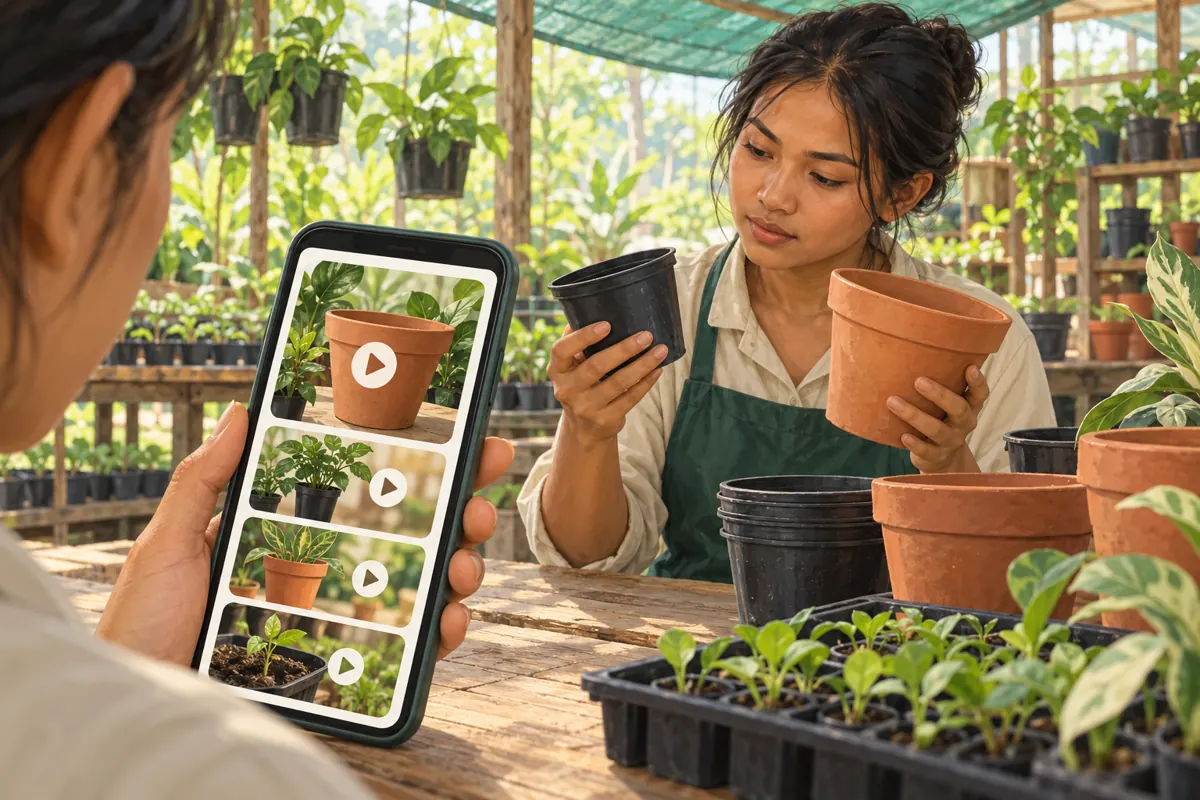
YouTube’s official desktop instructions let you create a playlist from a video’s watch page through More, Save and Create new playlist. Give the collection a clear name and select its privacy setting. Add the relevant videos, open the playlist and drag videos upward or downward into the intended order. The same help page distinguishes this from temporarily rearranging videos in the watch-page playlist panel. Reopen the collection to check the saved arrangement.
YouTube says reordering is unavailable for playlists containing only Shorts, so this workflow uses ordinary videos. Keep the setup simple while testing: use only the demonstrations necessary for this customer task. Before sharing publicly, check access as a visitor. An owner’s successful preview is not enough. Also remember that the displayed sequence is a suggested route; viewers can arrive at an individual video or choose another item rather than following the entire collection.
5. Make every video understandable on its own
A customer may receive only the pot-selection link from a friend. That video should identify the seedling and situation without requiring the viewer to remember an earlier episode. Begin with a brief context statement, show the relevant object and explain the decision being demonstrated. Keep essential qualifications inside the video where they are needed. A playlist introduction cannot repair an ambiguous instruction that circulates separately.
For a Cambodian shop serving Khmer-speaking buyers, prepare narration and supporting labels in the language those buyers understand. This English article does not imply that the customer-facing demonstrations should be English. Keep plant names consistent across speech, packaging and staff replies, and show the actual products when names could be confused. Avoid filling the screen with translated paragraphs. A clear close-up, a concise spoken explanation and reviewed captions can each address a different comprehension problem.
6. Test the handoff from one explanation to the next
Ask a colleague who did not arrange the playlist to open its shared link on a phone. Give them a realistic task: find the container explanation, identify what materials the next demonstration requires and locate the follow-up advice. Watch where they hesitate. Do not guide their taps immediately; otherwise, you are testing your own ability to explain the interface rather than the collection’s clarity.
Record concrete problems. Perhaps two thumbnails show nearly identical pots, a title uses an unfamiliar plant name, or the next demonstration introduces a tool without explanation. Fix the smallest relevant issue and repeat that part of the check. Also open each video directly to test independent understanding. These checks do not establish that all customers will understand the guide, but they can expose avoidable confusion before staff begin sending it in response to enquiries.
7. Promote the guide with a specific reason to watch
Introduce the playlist wherever the shop already communicates with interested customers. A hypothetical caption might say: bringing home this herb seedling? Our guide shows the container and materials used in our shop demonstration, followed by the potting process. This tells the reader what they will find. A vague invitation to watch all our videos asks for attention without explaining its value.
Choose the destination according to the enquiry. Send the collection when someone needs the complete introduction; send the individual demonstration when their question is narrowly about the container. Add a sentence explaining why that link is relevant. Before reusing the message, check that any stock, collection or contact information it contains is still correct. Keep temporary offers separate from the enduring educational sequence so a useful demonstration does not become confusing when a promotion ends.
8. Apply a policy check before considering panel services
The supplied catalogue includes the exact title “Youtube Views ~ Video/Shorts ~ Max 10M ~ 50k/days ~ Instant ~ 𝐍𝐎 𝗥𝗘𝗙𝗜𝗟𝗟”. Its name identifies a video or Shorts view offering, but the brief provides no description. The title alone does not verify delivery methods, timing, audience location or compatibility with playlists. It also does not show that viewers would follow the nursery’s sequence. Treat those gaps as unanswered questions, not benefits to assume.
YouTube prohibits artificial increases in engagement and says a hired promoter’s actions can affect the channel. Artificial traffic may be excluded and lead to strikes. If a service’s method would artificially inflate views, do not use it. Purchased engagement is not evidence of genuine interest, sales, advertising delivery or Cambodian users. For this nursery workflow, a useful next investment may be a clearer demonstration or better translation; neither requires an unsupported engagement claim.
9. Review customer questions without overstating results
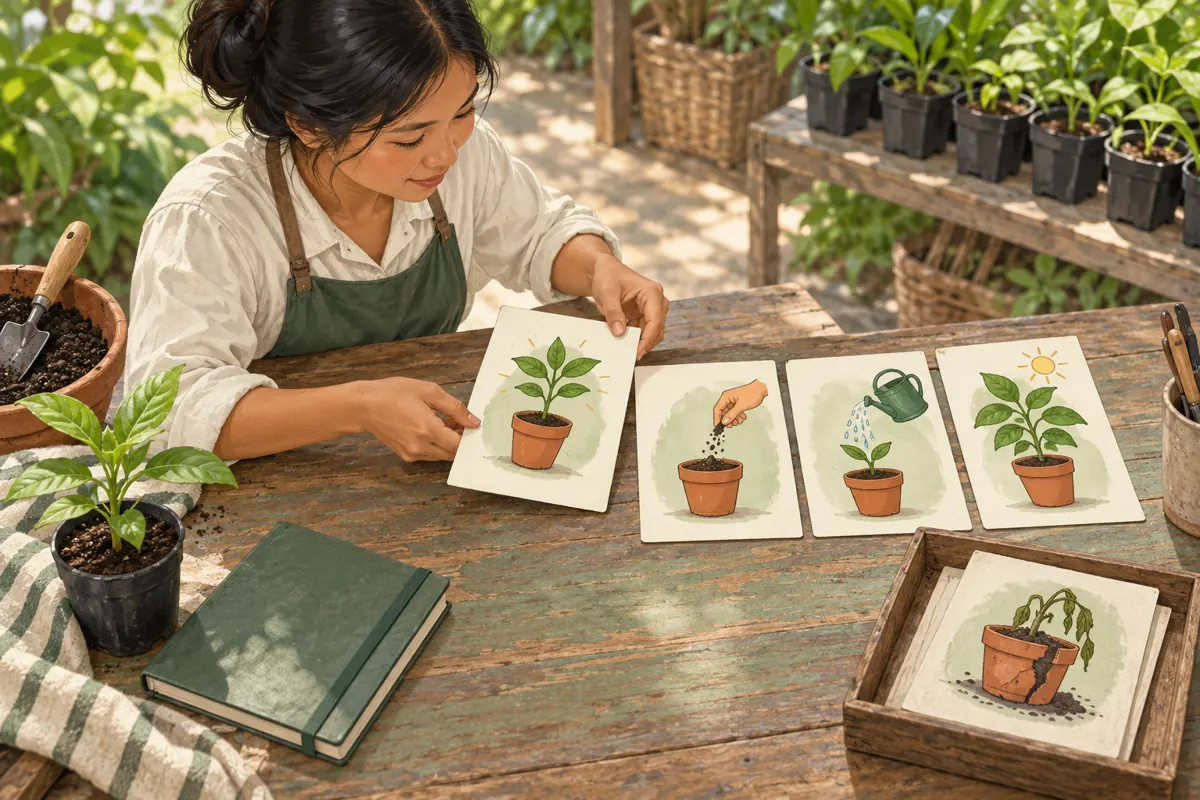
After staff begin sharing the guide, note the questions that still need an explanation. In a hypothetical enquiry, a buyer might ask whether the decorative outer pot shown in one clip is the actual planting container. That suggests a specific visual distinction to clarify. It does not prove the entire playlist failed, and one clear enquiry does not prove the collection increased sales.
Keep separate records for content changes, promotion activity and business outcomes. Note when the order changed, which message introduced the guide and what customers explicitly reported. If someone says they watched the container demonstration before visiting, record that statement accurately without claiming it represents everyone. An SMM-panel delivery record, if one exists, belongs with the service history. It cannot establish who understood a demonstration, who lives in Cambodia or why a particular purchase happened.
10. Maintain the sequence when products or advice change
Assign one staff member to review the collection whenever the demonstrated plant, container or instructions change. First decide whether the existing explanation is still valid. A different pot colour may require no change; a different container design may make a close-up misleading. Replace or revise the affected explanation and check the surrounding transitions. Do not leave contradictory versions together simply because the older video has accumulated attention.
Common mistakes include putting every new upload first, mixing unrelated plants, using nearly identical titles and promoting a collection before checking access. Another is treating more videos as automatic improvement. Keep a short maintenance note stating what changed, why and which shared replies need updating. If a demonstration is temporarily unsuitable, stop recommending that part of the guide until reviewed. The collection should remain a practical route through a defined task, with a named person responsible for keeping it coherent.
Frequently asked questions
Should the shop’s most popular video go first?
Only if it answers the first question in this particular customer task. Popularity does not establish that a video provides the necessary introduction. A visually appealing potting clip may belong later if buyers first need to identify the plant and prepare materials. Choose the opening according to what the viewer must understand.
Should Khmer and English demonstrations be mixed together?
Consider whether the intended viewer can follow the whole route. Alternating languages may interrupt understanding even when the topics are correctly ordered. If the shop has complete versions in both languages, separate clearly named collections can be easier to use. If translations are incomplete, state what is available rather than implying equivalent coverage.
Can the shop include a supplier’s demonstration?
Review whether its products, terminology and instructions fit the guide. Prefer your own accurate explanation when the supplier’s demonstration requires qualifications your customers might miss. Do not download and re-upload someone else’s recording without the necessary permission. Also plan what staff will send if an externally controlled video becomes unavailable.
Does a panel view order show that people watched the whole playlist?
No. The supplied service title does not establish playlist viewing, comprehension or a Cambodian audience. A reported delivery count cannot answer those questions. Evaluate the promotion method against YouTube’s rules before any purchase, and use actual customer questions to identify what the guide still needs to explain.
Explore the current service catalogue, create an account, or ask a specific question through support tickets.
Prepared with AI assistance. Illustrations explain the workflow and do not represent customer results.