
20/10/2026 18:48
Can You Hear the Drawer? YouTube Audio Library Music for Cambodian Furniture Workshops

A furniture demonstration can look attractive while hiding the detail a buyer needs. Music may cover a drawer catching on its runners, a latch closing or the explanation of which fittings are included. For a Cambodian workshop promoting cabinets on YouTube, sound deserves its own review before the video reaches customers. This workflow explains when to use music, how to select it from YouTube’s Audio Library and how to keep the recording useful. It also gives SMM-panel customers a clear boundary: purchasing engagement cannot repair an unclear demonstration or establish that Cambodian buyers want the product.
1. Start with the question the sound must answer
Consider a hypothetical furniture workshop in Phnom Penh preparing a video about a bedside cabinet. Customers ask whether its drawer closes gently and whether the handle is included. The owner initially chooses cheerful music for the entire edit. During review, a colleague notices that neither the closing sound nor the final spoken explanation is easy to hear. The video needs an audio decision before it needs wider distribution.
Write the buyer’s question at the top of the production brief. Then identify what viewers must see, hear and read to understand the answer. For this example, show the drawer moving, preserve its actual closing sound and explain the included handle. Music can support a brief opening or closing shot. It should not occupy every second simply because the editing template contains a music track.
2. Separate product sound, speech and decoration
Treat the recording as three ingredients. Product sound documents the action being shown. Speech explains details that the picture cannot establish. Background music contributes mood. Giving each ingredient a purpose makes it easier to decide what to remove. A drawer demonstration may need product sound and one clear sentence, while a montage of wood finishes may work with music and readable labels.
Make these choices before filming. Ask the presenter to explain the cabinet first, pause, and then operate the drawer without speaking over it. Record a separate close view if needed, but keep the sound connected to the action that produced it. Avoid replacing a rough closing sound with a smoother library effect. That would change the buyer’s impression of the product rather than simply improve presentation.
3. Capture a usable original before choosing music
Choose a reasonably quiet moment in the workshop. Pause background radio or television, move away from unnecessary noise and make a short trial recording. Listen before recording the full demonstration. If the phone mainly captures traffic, reposition it closer to the cabinet while keeping the action visible. Do not assume that music will disguise a recording problem without also concealing useful detail.
Keep conditions reasonably consistent when comparing two drawer mechanisms. Moving the microphone much closer for one example can make it sound louder even when the product difference is small. Describe the clip as a practical demonstration, not a laboratory sound test. For Cambodian customers who prefer Khmer explanations, record natural Khmer speech and check the product terms with someone who handles enquiries. An English product code can remain unchanged where it identifies the exact fitting.
4. Choose an Audio Library track for a specific job
YouTube’s official guidance places Audio Library in YouTube Studio. Its music filters include mood, genre, duration and attribution. Preview a candidate and download the selected track. These controls help narrow the choice, but the workshop still needs to decide whether music belongs in the scene.
Choose against the edit, not against personal taste alone. In the hypothetical cabinet video, a restrained instrumental opening could accompany the whole-product shot. A busy rhythm might compete with the presenter or make an ordinary demonstration feel rushed. Listen beyond the opening: a track that begins gently may become much louder later.
Limit the shortlist to a few suitable options and compare them under the same footage. Include a version without music. If the unscored version answers the buyer’s question more clearly, use it. The purpose of this exercise is a useful promotional video, not a demonstration of how many editing features the workshop can apply.

5. Keep the selected track and its attribution together
For Creative Commons tracks, YouTube instructs creators to copy the attribution from the track’s licence information into the video description. Its Attribution not required filter identifies tracks under the standard Audio Library licence that do not need that credit. Check the selected track rather than assuming every track has identical requirements.
Create a simple music record beside the editing project: track title, artist, downloaded filename, selection date, attribution requirement and copied credit when applicable. These are suggested internal records, not additional YouTube requirements. They let another staff member identify the actual file used instead of guessing from a similar title.
Prepare the credit when selecting the music, rather than leaving it for upload day. If the editor changes tracks, update the record and description draft together. Keep any required attribution intact when adding a Khmer product explanation or an English model name elsewhere in the description.
6. Mix around the demonstration’s most important moment
Build the edit around the drawer action. Let the opening establish the cabinet, bring the music down before the explanation and leave room for the real closing sound. If a musical beat lands exactly on the latch click, move or remove the music at that point. Otherwise, viewers may struggle to distinguish the product from the soundtrack.
There is no useful universal volume percentage for every recording. A quiet speaker, a loud track and a distant microphone produce different results. Listen to the combined export and adjust according to intelligibility. The presenter should not have to compete with the backing track.
Use short, gentle transitions where they help the edit sound natural. Keep an untouched copy of the original audio. If noise reduction makes the drawer sound hollow or removes part of the closing action, reduce the processing or record again. Cleaner does not automatically mean more faithful.
7. Review on the devices customers may actually use
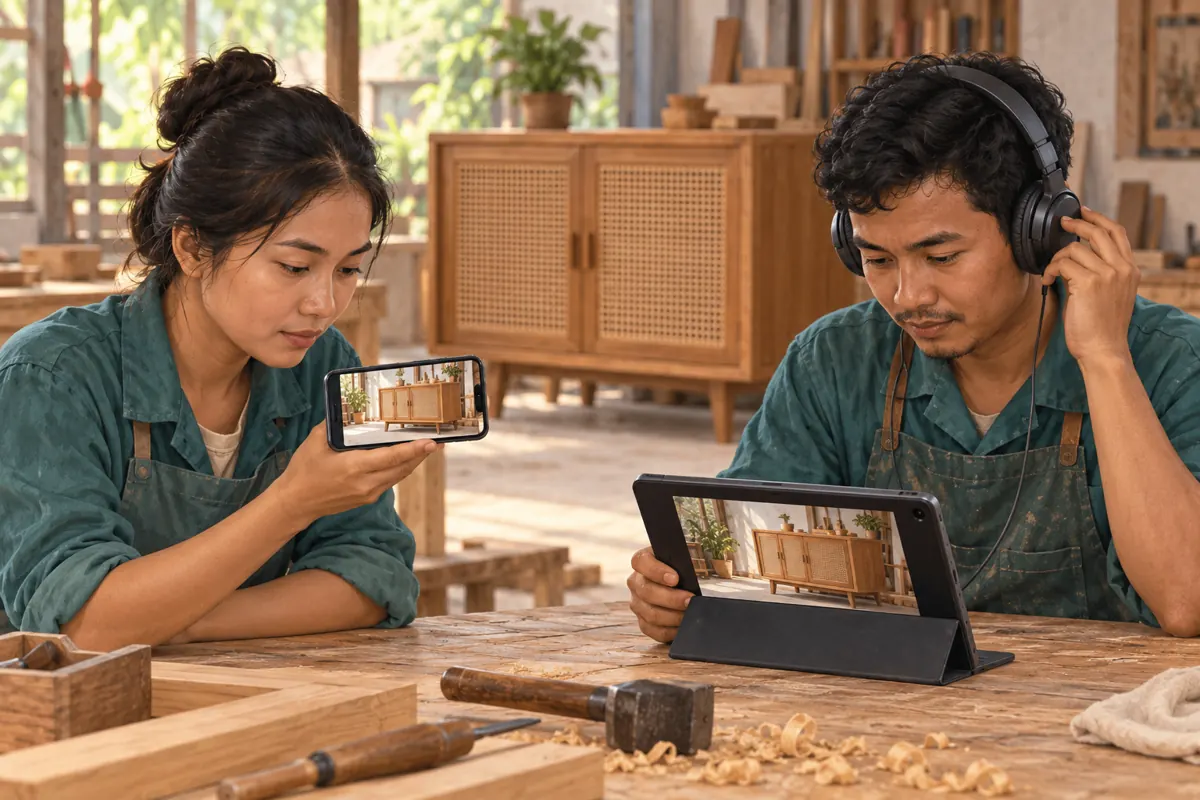
Run two listening passes: one through headphones and one through a phone speaker at an ordinary listening level. Headphones can reveal unwanted background music or abrupt edits. A phone speaker can expose speech that disappears beneath the soundtrack. Neither test establishes how every customer will hear the clip, but together they reveal problems that a single editing setup can miss.
Ask a colleague who did not edit the video to explain what they learned. Can they identify the cabinet, describe the drawer action and say whether the handle is included? If they cannot, revise the communication before debating the music style.
Also watch once with sound muted. Add concise on-screen information for essential specifications and review captions where provided. Do not claim that captions replace audible evidence of how a mechanism sounds. They support understanding when the viewer cannot listen.
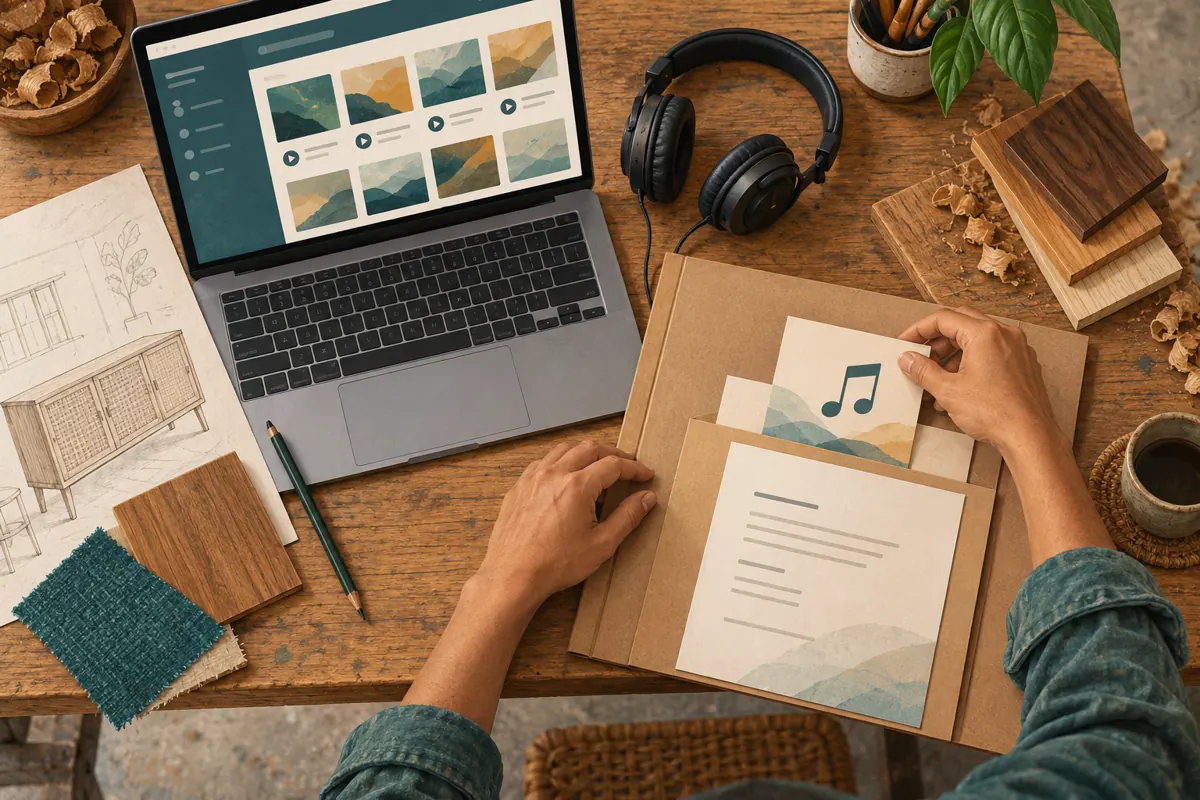
8. Avoid music mistakes that complicate later promotion
YouTube distinguishes its Audio Library from other channels or libraries advertising royalty-free music. Its guidance also does not resolve off-platform music issues. If the workshop plans to reuse the edit elsewhere, check the applicable track terms and destination requirements before carrying the soundtrack across.
Keep a clean export containing the workshop’s own speech and product recording, alongside the finished YouTube version. This is a practical editing precaution: it allows a different soundtrack to be added without rebuilding the cabinet demonstration. Name versions clearly enough that a colleague cannot accidentally upload the wrong one.
Other avoidable mistakes include leaving a radio audible behind the presenter, retaining an old credit after replacing the track, and adding dramatic sound effects that imply better construction. Check the final exported file rather than only the editing timeline. An export can contain an overlooked audio layer that was not part of the intended review.
9. Make a separate decision about SMM-panel services
The supplied cambo-tools.com catalogue includes the exact public name “YouTube Like ~ Max 5k ~ 5k/days ~ Instant ~ 𝗥𝗘𝗙𝗜𝗟𝗟 30D”. The entry is presented as a YouTube likes service, but its description is empty. The name alone does not verify delivery, audience location, genuine interest or the meaning and conditions of its refill wording.
YouTube’s fake engagement policy prohibits artificial increases in views, likes, comments and other metrics. It also warns that a hired promoter’s actions can affect the channel. Do not order artificial engagement for this demonstration or treat a catalogue listing as platform approval.
For an SMM-panel customer, reviewing a service can reasonably end with deciding not to buy it. Purchased engagement is not evidence of sales, ad delivery, Cambodian users or demand for the cabinet. Direct the promotion effort toward a clear demonstration, relevant sharing with willing recipients and useful responses to actual product questions.
10. Hand over a complete video and a clear next action
Before the workshop’s authorised publisher uploads the video, assemble the final export, music record, description draft and product facts in one handoff. Specify which cabinet configuration appears and who should answer enquiries. A polished soundtrack will not help if the person replying quotes a different handle or assumes a delivery area that was never confirmed.
End the video with a practical invitation related to the demonstration. For the hypothetical workshop, ask interested viewers to send the cabinet model and the space available in their room. Avoid implying that watching, liking or commenting reserves stock. Keep customer addresses and private order details out of public discussion.
After publication, record genuine questions separately from general reactions. Repeated confusion about the handle suggests a content correction; an enquiry about dimensions suggests a useful follow-up. Neither observation proves that the music caused a business result. Use the evidence to improve the next explanation.
Frequently asked questions
Does every furniture demonstration need background music?
No. If the main question concerns how a drawer or latch sounds, an unscored demonstration may be more useful. Music can still accompany a separate opening or closing shot. Choose it only when it helps the presentation without competing with evidence or explanation.
Can we replace the drawer sound if the original recording is poor?
Re-record the actual cabinet action when possible. A stock effect may imply a quality the product does not have. If the original sound cannot be recovered, explain the action through footage and speech without presenting an unrelated effect as its real sound.
Should we translate the music credit into Khmer?
Keep the supplied attribution intact, including identifying details and links. Put your own Khmer product explanation around it. Translating or shortening the credit without checking its requirements can remove information that identifies the artist, track or licence.
What if music sounds good on headphones but hides speech on a phone?
Revise the mix for intelligibility. Lower or remove the backing track during speech, then replay the exported file on both devices. Do not solve the problem by asking every viewer to turn up the volume; that may simply make both competing sounds louder.
How can the workshop assess whether the revised demonstration is useful?
Ask reviewers to describe the product and included fittings, then examine genuine enquiries after sharing. Note misunderstandings and improve the relevant section. Likes alone cannot show comprehension, and purchased engagement cannot establish demand or attribute sales to the soundtrack.
Explore the current service catalogue, create an account, or ask a specific question through support tickets.
- YouTube Help: Use music and sound effects from the Audio Library
- YouTube Help: Fake engagement policy
Prepared with AI assistance. Illustrations explain the workflow and do not represent customer results.