
22/10/2026 00:02
Will the Care Guide Still Be There? Telegram Auto-Delete Checks for Cambodian Cutting-Board Shops

A customer may discover a cutting board today and look for its care instructions after taking it home. If the shop promotes a Telegram guide that disappears before that second visit, the promotion creates an unfinished journey. For Cambodian kitchenware businesses, keeping useful information available deserves as much attention as the photo that attracts the first enquiry. This workflow explains how to review Telegram auto-delete settings, decide which information should remain accessible, and repair missing destinations. It also explains why an SMM panel service cannot substitute for a dependable customer resource. The shop and situations below are hypothetical, not customer testimonials.
1. Start with the promise customers will return to
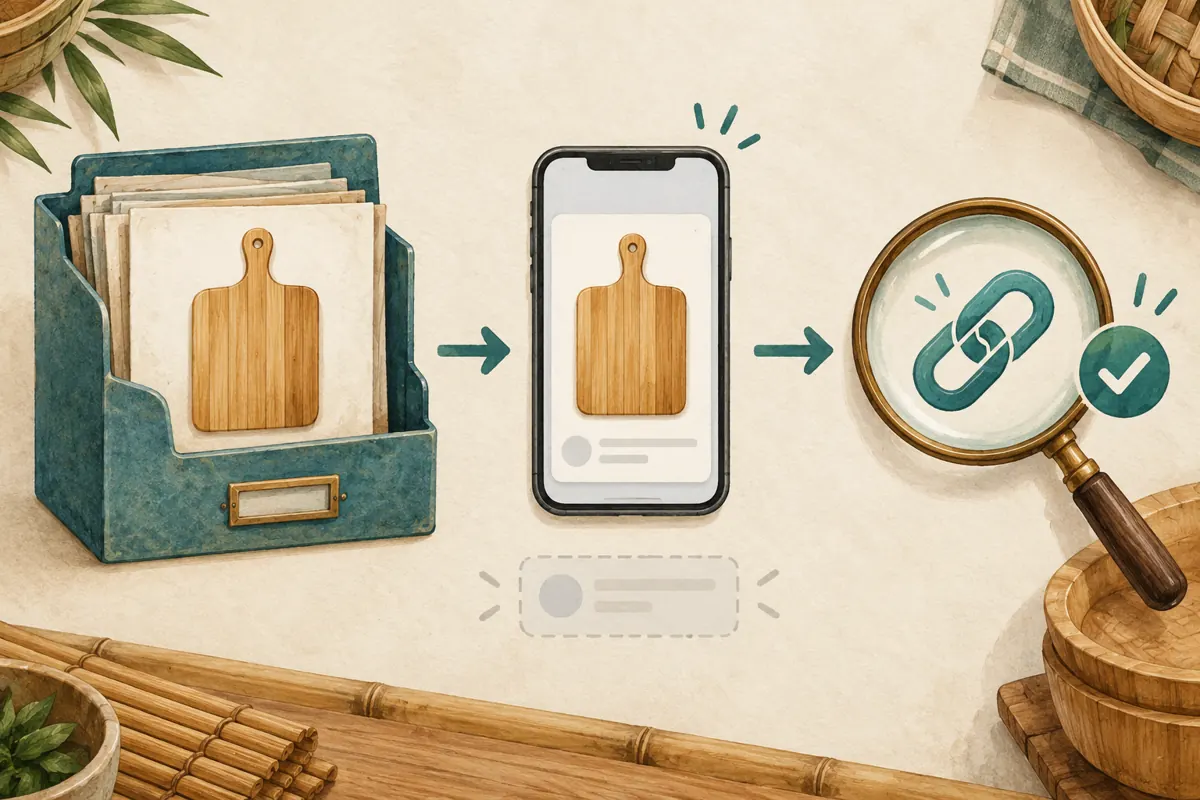
Imagine a small Phnom Penh shop selling bamboo cutting boards through its counter and social channels. Its promotional video ends with an invitation to open a Telegram care guide. The guide identifies the board shown, explains where to find the supplier's instructions and gives a contact route for questions. The customer might open it while comparing products, again after collection, and later when checking a detail.
That makes the guide a continuing part of the offer. Before promoting it, write down the expected return journey: discover the board, identify the correct model, collect it, then revisit the instructions. Decide how long the shop intends to support that journey. A same-day stock announcement and a reference customers need after purchase have different useful lives, even when both appear in the same channel.
2. Understand what the timer actually measures
Telegram's official Auto-Delete, Widgets and Expiring Invite Links announcement explains that auto-delete counts from when a message is sent, rather than when someone reads it. It also says that enabling the timer applies to subsequent messages, while earlier messages remain, and that channel and group administrators control the setting. These distinctions matter when an older guide survives but a newly posted replacement disappears.
Review the actual channel's auto-delete control in the app you use, noting its displayed state and duration. Menu wording can vary, so avoid following an old screenshot mechanically. Inspect the relevant message's expiry information where available. Do not change a live channel merely to explore the feature; use a separate test space for experiments. Record what you observed before deciding whether the destination can support the promotion.
3. Separate temporary announcements from continuing instructions
Make a short content inventory with three fields: the post's purpose, when its information becomes outdated, and whether customers need to revisit it. A notice about today's collection arrangements has a narrow purpose. A product identification guide may remain useful while that model is supported. A price list needs regular review, even if the underlying product photographs stay accurate.
For a channel intended to act as a lasting catalogue, keeping auto-delete disabled may fit the editorial purpose better than routinely replacing vanished posts. Temporary notices can carry explicit validity dates and receive a planned review. If the business maintains a separate temporary-update space, explain its role clearly so readers know where lasting guidance lives. This separation is an editorial arrangement, not a claim that Telegram offers a permanent exemption for each chosen post. Check the applicable settings before relying on any retention assumption.
4. Keep an approved master outside the disappearing conversation
Store the approved care text, original photographs and product identifier in a business-controlled folder or document system. Give the master a revision date and a named reviewer. Keep the customer-facing version free of private supplier conversations, customer addresses and internal pricing notes. The purpose is to make accurate republication possible without reconstructing instructions from memory.
In the hypothetical shop, the master might distinguish a bamboo board from a different laminated model that looks similar in a small photograph. The person responsible for product information should verify the instructions against the appropriate supplier documentation. A social media assistant can then format the approved material without inventing cleaning advice. Retaining a master also helps when an image needs replacing or a translation needs correction. A surviving file is useful only when the team can tell which product and revision it belongs to.

5. Build a promotion destination that answers the next question
A durable guide still needs enough context to be useful. Begin with the product name or shop identifier, show the relevant board clearly, and explain the scope of the instructions. Separate confirmed product guidance from questions that require staff review. Finish with a clear contact route and the information customers should provide, such as the model identifier and a photograph of the issue.
For Cambodian readers, prepare Khmer wording when that matches the shop's audience, with additional languages only where useful. Have someone familiar with the product check that translations preserve restrictions and distinctions. Keep temporary delivery promises out of the lasting care text, or give them a clearly dated separate notice. The promotion should describe the resource accurately: a care guide for a specified board, rather than an unsupported promise that every question about every board will be answered there.
6. Test the complete route as an ordinary reader
Ask a colleague using an ordinary reader account to open the exact destination used in the promotional draft. Begin from the actual entry point, such as the social post or shop message. Check whether the person reaches the intended guide, can identify the board, and understands how to ask a follow-up question. Testing from an administrator's recent chat history can conceal navigation problems.
Telegram's Channels FAQ says new subscribers can see channel history and that deleting a channel message removes it for subscribers. Existing history is therefore useful, but a deleted guide cannot serve a newcomer. Record the destination, test date and result. Repeat the check when you replace the guide or change relevant settings. For time-sensitive content, include a later review in the work plan rather than assuming that one successful opening proves long-term availability.
7. Decide whether an SMM service addresses the actual problem
A missing guide is a content availability problem. A confusing guide is an explanation problem. Neither is resolved by increasing a visible audience count. Before considering a panel request, name the intended task and ask what evidence would show that it was completed. If the goal is helping buyers use the guide, reader testing and genuine support questions provide more relevant evidence than a membership total.
The supplied catalogue includes the exact public service name Telegram - Channel/Group Members ~ Max 2M ~ 50k-100k/days ~ 𝐋𝐢𝐟𝐞𝐓𝐢𝐦𝐞. Its name presents it as a channel or group membership service, but the brief supplies no supporting description. Treat the embedded quantities and longevity wording as unverified listing claims. They establish neither Cambodian audience origin nor genuine interest, sales, ad delivery or official Telegram affiliation. Review current terms and platform rules before any purchase. Nothing supplied establishes that this service preserves posts, repairs links or distributes care instructions.

8. Repair a vanished guide without hiding the gap
When a customer reports a missing resource, first identify the exact guide and destination involved. Check whether the post is absent, whether the link points elsewhere, or whether access conditions explain the problem. A failed opening alone does not identify the cause. Compare the report with the content record and current channel settings before attributing it to auto-delete.
If republication is needed, retrieve the approved master, verify that its instructions still apply, and publish a clearly identified current version. Review the retention setting before creating the replacement. Update the promotional references you control and test their destinations again. Do not assume that posting identical text repairs the original message link. A brief notice can tell readers where the current guide lives. In customer replies, acknowledge the missing information plainly and provide the replacement without suggesting that it was continuously available.
9. Avoid cleanup decisions that erase useful context
One common mistake is enabling expiry to make a busy channel look tidier without first identifying its reference material. Another is treating a date in the caption as a technical retention control. A date tells readers when information applies; it does not determine whether the message remains accessible. Likewise, maintaining an approved master helps recovery but does not keep the published destination alive.
Do not use disappearing posts to conceal a mistaken offer or unresolved complaint. Correct the information and preserve an appropriate internal account of what changed. Avoid promising that expiry eliminates every copy someone may have retained. Finally, resist reposting the same guide repeatedly without identifying the current version. That can leave staff sharing different destinations and customers comparing inconsistent instructions. A deliberate replacement with updated references is easier to maintain than a growing collection of almost identical posts.
10. Review usefulness separately from delivery records
After promotion, record practical observations: whether the guide opens, whether readers identify the correct model, and which questions still need explanation. If customers repeatedly ask which board the instructions cover, improve the identification photo or opening sentence. If they cannot locate the resource, improve the route. Do not interpret silence as proof that every buyer understood it.
Keep any panel order history in a separate record containing the requested service, target and reported delivery status. It should not become evidence that customers read, understood or acted on the guide. Assign responsibility for checking lasting resources whenever the product changes and before another promotion reuses them. For the hypothetical cutting-board shop, the useful outcome is a customer reaching accurate, current guidance when needed. An honest review can identify that success without manufacturing a conversion claim or crediting unrelated engagement.
Frequently asked questions
Should every Cambodian shop disable Telegram auto-delete?
No single setting fits every purpose. A channel used as an ongoing product reference needs a different retention plan from a deliberately temporary conversation. Choose based on what readers have been promised and when they will need it. If the same channel mixes both purposes, inventory the important resources before changing its settings.
Does a new subscriber receive a fresh full countdown for an existing guide?
Do not plan on that. Telegram documents ordinary chat auto-delete as counting from sending time, not the reader's first opening. A person arriving late may have little opportunity to use an expiring resource. Place continuing guidance somewhere whose retention arrangement matches the promised access period.
Will changing the timer bring back a guide that already disappeared?
Do not treat a setting change as recovery. Check whether you still have the approved source material and prepare a current replacement if needed. Verify its destination and update references you control. The workflow here relies on retaining and republishing approved content, not on an assumed Telegram restoration feature.
Can a membership service help customers find the correct instructions?
The supplied membership listing does not establish that capability. A membership-related delivery record cannot show that someone located the right guide or understood its contents. Test navigation directly, review genuine questions, and keep purchased engagement separate from evidence of Cambodian customer interest or sales.
What should staff say when someone asks for the missing version?
Explain that the earlier resource is unavailable and provide the current verified guide. If its instructions changed, identify the relevant difference instead of implying that the versions are interchangeable. Ask for the product identifier when necessary, and avoid giving model-specific advice until staff have confirmed which board the customer owns.
Explore the current service catalogue, create an account, or ask a specific question through support tickets.
Prepared with AI assistance. Illustrations explain the workflow and do not represent customer results.