
22/10/2026 03:14
Invitation Sent or Collaboration Accepted? Instagram Workshop Promotion for Cambodian Pottery Studios
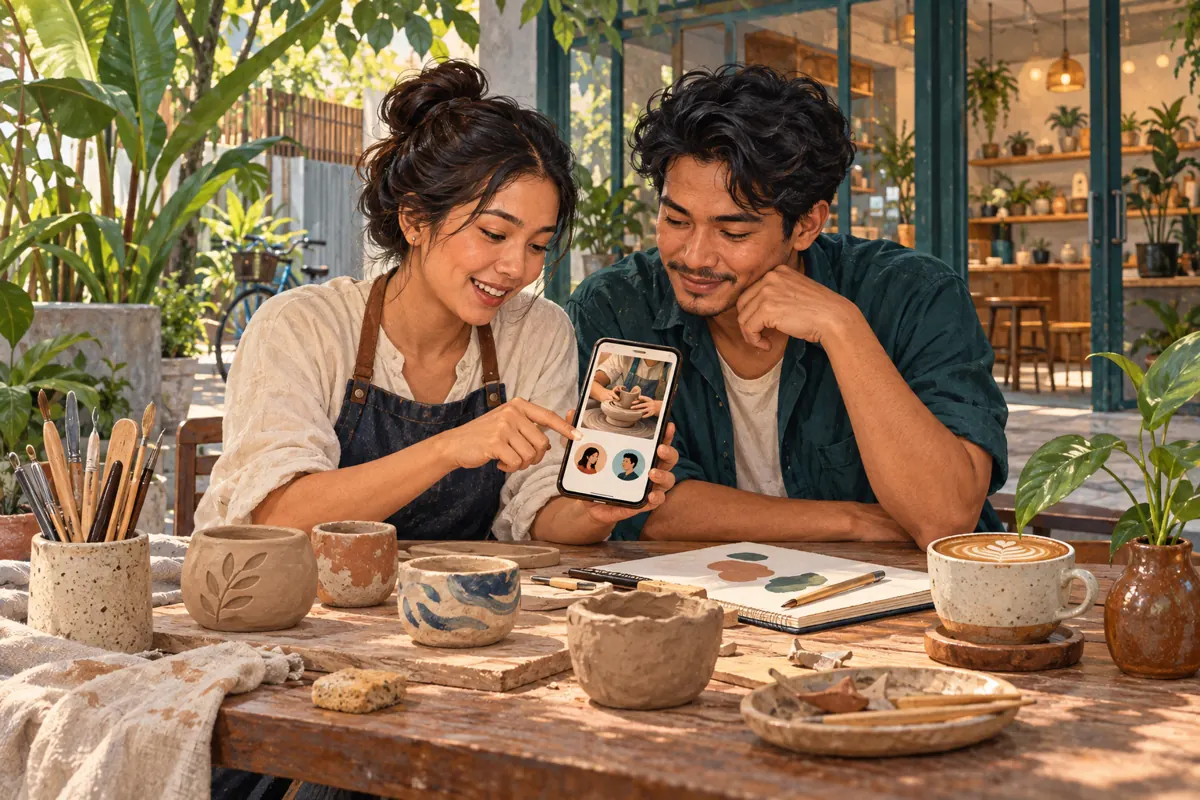
A pottery studio and a café can agree to host a workshop yet still publish an announcement that leaves customers confused. Who teaches the class? Where does it happen? Which business confirms a place? An Instagram collaboration needs answers to those questions before either partner starts promoting it. This guide uses a hypothetical Phnom Penh pottery workshop to explain a practical workflow: agree on the offer, prepare one approved announcement, complete the collaboration invitation and handle enquiries consistently. It also explains where SMM-panel service claims fit into that decision—and why purchased engagement cannot establish that local customers want to attend.
1. Decide whether the announcement belongs to both businesses
In the hypothetical example, a pottery tutor provides instruction and materials while a café provides the room. Both businesses help deliver the experience, so a jointly authored announcement can make sense. Start by asking whether each partner is willing to stand behind every promise in the post. A café that merely supplied a drink for a photograph may need a credit rather than a shared announcement.
Meta describes Instagram Collabs as a way to co-author feed posts, carousels and Reels. Acceptance allows the content to appear on the collaborators’ profile grids and be shared with their audiences. That describes distribution, not guaranteed attendance or universal follower exposure. The practical reason to use it here is to present a genuinely shared workshop coherently. See [Meta’s explanation of Instagram Collabs](https://about.fb.com/news/2023/08/music-and-collabs-on-instagram/).
2. Settle the workshop offer before selecting photographs
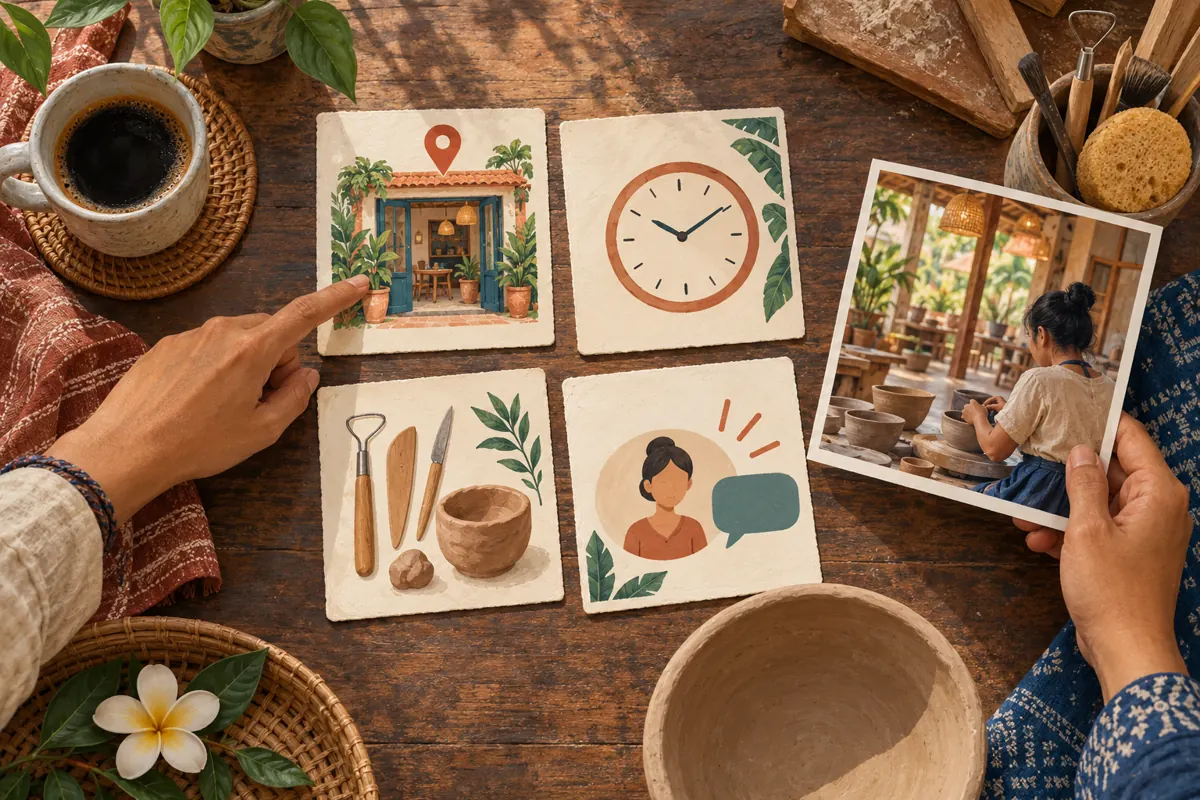
Write a short offer sheet that both partners can check. Include the venue, calendar date, start and finish times, teaching language, activity, included materials, booking contact and cancellation arrangements. For a Cambodian audience, make the location specific enough to distinguish the café from the pottery studio. State the currency wherever a price appears. Avoid publishing an attractive location photograph that sends visitors to the wrong premises.
Pottery also needs a clear explanation of what happens after the class. If participants make an unfired object, explain any later firing and collection arrangements that actually apply. Do not let a photograph of a finished glazed cup imply that everyone takes that result home immediately. In this hypothetical workshop, the partners would settle those details before choosing the image. Unconfirmed inclusions should remain out of the announcement until somebody can verify them.
3. Choose a publishing lead and an enquiry lead
Assign one person to prepare and publish the agreed post. Separately, assign the business that will maintain the booking record. These responsibilities can belong to different partners, but both people need the same final offer sheet. Keep a small internal note containing the selected accounts, approved media, caption version, planned publishing time and the person responsible for checking the live result.
Choose the publishing lead for their ability to maintain the announcement, not simply because their account looks larger. Choose the enquiry lead for their ability to check availability and confirm arrangements. In the hypothetical example, the studio might answer questions about teaching while the café supplies access information. Only the designated booking lead should promise a place. A social-media collaborator invitation does not require the partners to exchange passwords or hand over their accounts.
4. Build a post that explains the shared experience
Give the opening image one job: show what participants will actually do. A close view of hands shaping clay is more useful than a decorative café photograph if the class is about hand-building. Additional images can show the working area, the tutor’s sample and the venue entrance. Identify samples honestly, especially when the tutor’s finished piece demonstrates a technique rather than a result every beginner can reproduce.
Arrange the caption around the customer’s decision. Explain the activity, name each partner’s role, give the confirmed practical details and finish with one booking instruction. If the intended participants use Khmer, prepare and review the customer-facing Khmer copy rather than assuming an English caption is sufficient. Where both languages are useful, check that dates, currencies, inclusions and collection conditions agree. Have someone unfamiliar with the planning read the post and describe what they think they are booking.
5. Treat the invitation and acceptance as separate checkpoints
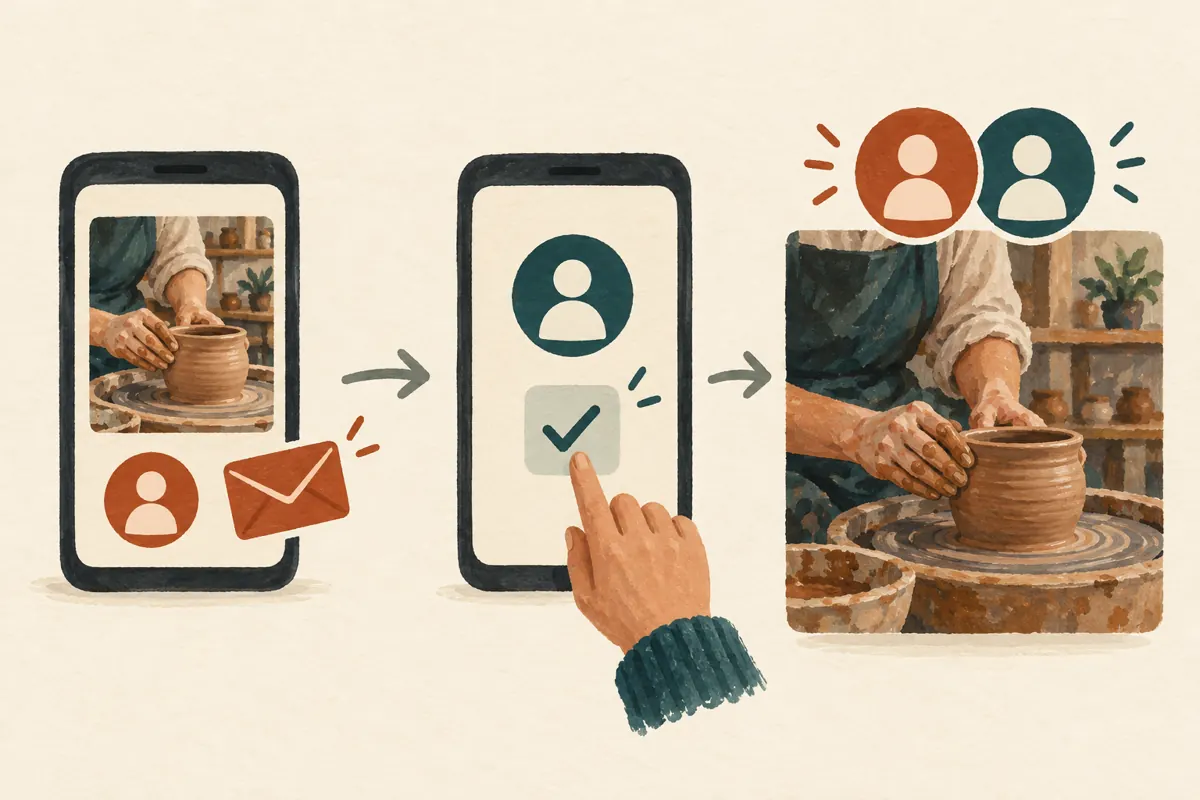
Before publishing, agree when the partner will be available to review the invitation. Use Instagram’s collaboration control for the selected post and check the intended account carefully. Similar display names are a poor substitute for checking the actual profile. Keep the approved caption and media available so the receiving partner can compare the live announcement with what was agreed.
Record the invitation as pending until the partner has reviewed and accepted it. A message saying that the design looks good is editorial approval; it does not complete Instagram’s acceptance step. After acceptance, check the post on both intended profiles and inspect the visible author information. Save the live post reference in the shared planning note. If the expected result is missing, resolve that uncertainty before directing a new promotional push toward the announcement.
6. Check commercial disclosure separately from co-authorship
Ask whether the arrangement includes payment, a free experience or another exchange of value for publishing content. Meta’s branded-content guidance requires its paid partnership label for content that meets its definition, including relevant gifted-product or service arrangements. Co-authorship and commercial disclosure answer different questions, so inspect the relationship rather than assuming the collaboration invitation handles everything. See [Instagram’s branded-content guidance](https://www.facebook.com/help/instagram/616901995832907?locale=en_GB).
For a hypothetical variation, imagine the businesses invite a local creator to attend free in exchange for posting about the workshop. That arrangement needs its own disclosure review before publication. Record what was provided and what content was agreed. Also settle permission to use the creator’s footage and any identifiable participant images. An agreement to appear in one announcement should not silently become permission for unrelated future promotional material.
7. Evaluate SMM-panel services against the actual task
The supplied cambo-tools.com catalogue includes the exact title “Instagram Likes ~ English Names ~ Max 1M ~ 100k/Days ~ Instant ~ 𝐍𝐎 𝗥𝗘𝗙𝗜𝗟𝗟”. Its description field is empty. The title identifies a likes offering, but it does not establish support for collaborative posts, Cambodian audience origin, authentic interest or booking outcomes. Treat the numerical and delivery wording as catalogue claims requiring clarification, not verified performance facts.
A likes service cannot accept a collaborator invitation, settle the workshop offer or confirm a customer’s reservation. Purchased engagement is not evidence of genuine interest, sales, ad delivery or Cambodian users. Instagram’s published guidelines also prohibit artificially collecting likes, followers or shares; review that restriction before considering an engagement purchase. For this workshop, spend effort first on accurate content and genuine partner communication. See [Instagram’s Community Guidelines](https://www.facebook.com/help/477434105621119?locale=en_GB).
8. Give enquiries one route to a confirmed place
Write a short response that both businesses can adapt: explain which account handles reservations, what information it needs and when a place becomes confirmed. Avoid collecting unnecessary personal details in public comments. A question about accessibility, the teaching language or collection arrangements deserves a useful answer before a booking request. Route specialist questions to the person who knows rather than improvising an attractive promise.
In the hypothetical example, someone messages the café asking whether they can join with a friend, then sends the same question to the studio. The partners should recognise this as one enquiry before reserving places twice. Use a shared internal booking reference and a consistent status such as enquiry, awaiting confirmation or confirmed. Keep the record accessible only to people handling the workshop. Neither a heart reaction nor a public expression of interest should reserve materials automatically.
9. Plan corrections before the first change arrives
Agree how the partners will handle a changed start time, unavailable tutor or revised collection arrangement. The publishing lead should check what can be corrected in the live post, while the booking lead contacts affected customers through their existing booking conversations. Updating public copy alone is insufficient when somebody has already made plans using the earlier information.
Keep a brief change note with the old detail, replacement detail and approval from the responsible partner. Recheck the post from each business’s profile after making the correction. If an image contains an outdated promise, decide whether the announcement needs replacement rather than relying on a distant clarification. Preserve the relevant post references so enquiries can be traced. If the businesses stop working together, agree who will answer outstanding customer questions before changing the public presentation.
10. Review understanding and bookings without inventing attribution
After the promotional period, compare the questions received with the information supplied. Repeated questions about firing may show that the post needs a clearer explanation. Confusion about the venue may justify a better entrance photograph. These observations are useful even when the partners cannot establish exactly which exposure led someone to enquire.
Keep platform observations, any external service records and booking outcomes separate. Do not count the same shared announcement twice simply because it appears on two profiles. If customers voluntarily explain how they found the workshop, record their answers as reported information, not proof of a complete customer journey. Review confirmed attendance and unresolved questions alongside the work required to manage the collaboration. Decide whether the next event needs another shared post, a clearer offer or a different partner based on that evidence.
Frequently asked questions
The café approved the artwork. Is the Instagram collaboration complete?
No. Artwork approval establishes agreement about the content. The receiving account still needs to complete the platform invitation process. Ask the partner to review the live announcement, then verify the resulting appearance on both profiles. Keep the campaign note marked pending until that check is complete.
What should we do if the collaboration control is unavailable?
Do not promise a shared-profile launch until you can verify the feature in the accounts being used. Consult Instagram’s current in-app help and inspect the available publishing controls. If timing requires a fallback, agree on an ordinary announcement with accurate partner credit and booking information, then describe it honestly as that.
Can purchased likes show that the workshop appeals to Phnom Penh customers?
No. A purchased like does not establish location, intent, availability or willingness to book. Even an unsolicited reaction is weaker evidence than a relevant enquiry or confirmed reservation. Keep any service delivery record separate from the workshop’s demand assessment, and consider Instagram’s restrictions on artificial engagement before purchasing.
Should both businesses answer every booking message?
Both can acknowledge messages, but one booking lead should confirm availability. Give the other partner a clear referral response and a way to pass on unresolved questions. This reduces duplicate reservations and conflicting promises while allowing each business to answer questions within its expertise.
How do we decide whether to repeat the collaboration?
Review whether customers understood the offer, whether enquiries reached the right person and whether confirmed participants received what was promised. Discuss the time each partner spent managing the announcement. Repeat the arrangement when the shared work is useful and manageable, rather than treating visible engagement as sufficient evidence.
Explore the current service catalogue, create an account, or ask a specific question through support tickets.
- Meta: New Ways to Create With Music and Collaborate With Friends on Instagram
- Instagram Help Centre: What is considered branded content
- Instagram Community Guidelines
Prepared with AI assistance. Illustrations explain the workflow and do not represent customer results.